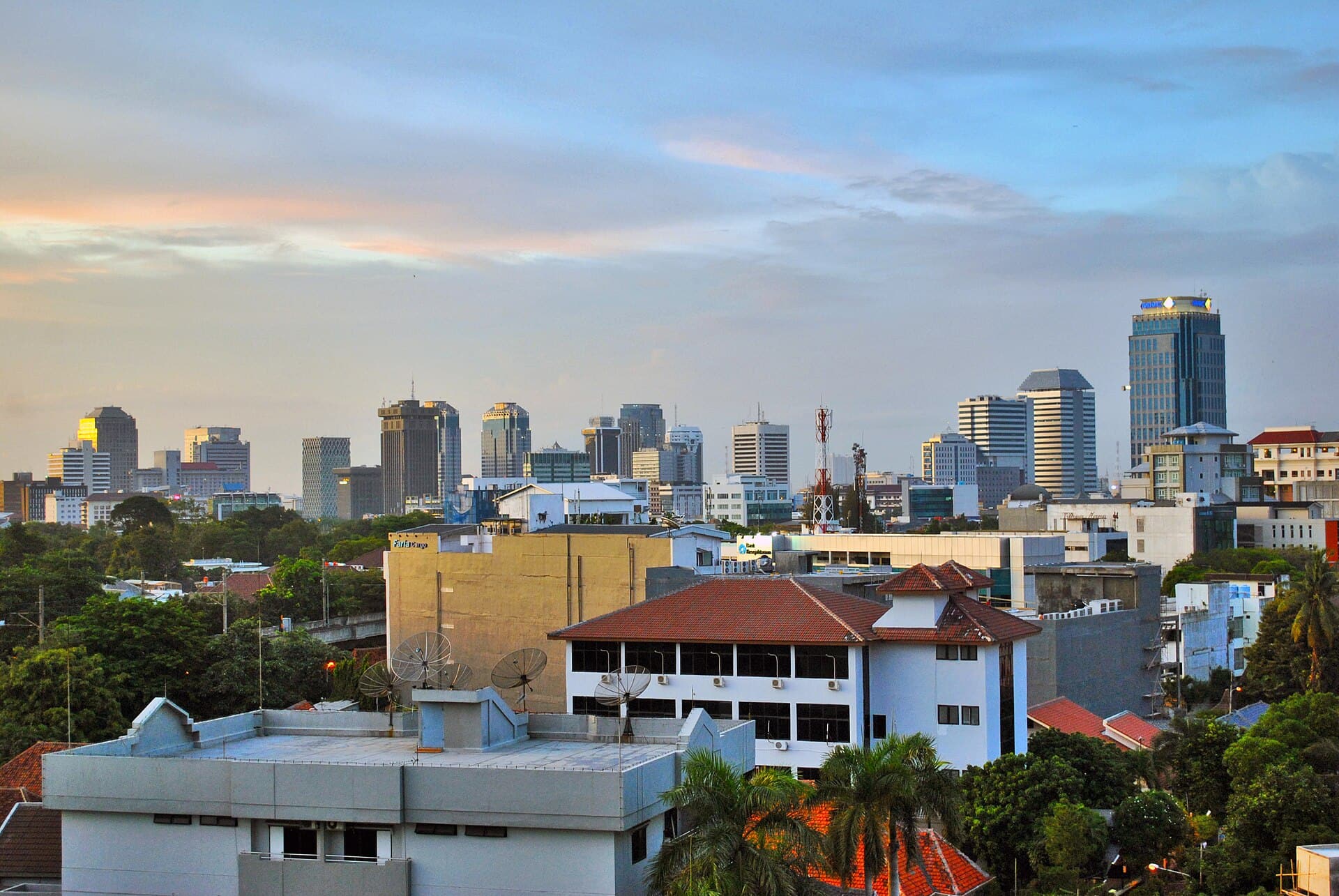
Jakarta has a tropical monsoon climate. Temperatures barely move through the year — typically the mid-20s °C at night and the low 30s by day — and humidity is always high. The meaningful difference is between the dry season, roughly May to September or October, and the rainy season, roughly November to March or April, with the heaviest rain usually in January and February.
For most visitors the best months are May to September: mostly dry days, calmer seas for the Thousand Islands and fewer weather disruptions. The trade-off is that air quality tends to be at its worst in the dry months.
The year at a glance
| Months | Weather | Good for | Watch out for |
|---|---|---|---|
| Jan – Feb | Wettest; frequent heavy downpours | Museums, malls, food | Flooding, slow traffic, rough seas |
| Mar – Apr | Rain easing; hot and humid | City sightseeing between showers | Afternoon storms; Ramadan and Lebaran often fall around now |
| May – Jun | Start of the dry season | Everything; Thousand Islands | School holidays from late June |
| Jul – Sep | Driest months | Islands, day trips, walking the old town | Haze and poor air quality |
| Oct – Nov | Rains return | Lower hotel rates | Sudden afternoon downpours |
| December | Wet; festive in the malls | Shopping, food | Holiday traffic to Puncak and Bandung |
Rain and flooding
Rain in Jakarta is usually an event rather than a mood: a violent downpour for an hour or two, often in the afternoon or evening, then clear skies. Sightseeing in the morning and keeping the afternoon for museums or malls works well in the wet months. In January and February, however, prolonged rain can flood low-lying districts — parts of the north are sinking and lie below sea level — and bring roads and some rail lines to a halt for a day or more. The main hotel and business areas along Thamrin and Sudirman are less affected, but allow extra time for airport transfers in this period and keep plans flexible.
Air quality
Jakarta regularly ranks among the more polluted big cities in the region, with the worst readings usually between June and September, when there is little rain to wash the air. Most healthy visitors notice haze rather than symptoms, but if you have asthma or travel with small children, check an air-quality app daily, plan indoor activities for bad days and bring a good mask.
Ramadan and Lebaran
The fasting month moves about eleven days earlier each year. Jakarta carries on almost as normal: malls and most restaurants stay open, though some small eateries close by day and curtains go up over windows. Evenings are lively as people break the fast together. At Lebaran (Idul Fitri), millions leave for their home towns and the city becomes strangely quiet and traffic-free for about a week — pleasant for sightseeing, but many small businesses shut, and trains, flights and the roads to Bandung and Puncak are packed just before and after.
Public holidays and events
- Chinese New Year (Imlek) and Cap Go Meh fifteen days later: temples in Glodok are at their most atmospheric.
- 22 June: the city’s anniversary. The Jakarta Fair, a huge trade fair and funfair, usually runs for several weeks around this date.
- 17 August: Independence Day, with flag ceremonies and neighbourhood games across the city.
- Long weekends: whenever a holiday falls near a weekend, traffic to Puncak and Bandung is severe and attractions such as Ancol, Taman Mini and Ragunan are very busy.
Religious holidays follow lunar calendars and move every year — check dates for your trip.
Best time for the day trips
- Thousand Islands: May to September for the calmest seas and clearest water. Boats can be cancelled in rough weather between about December and February.
- Bogor: known as the “rain city”, it can be wet in any month; go in the morning, as showers usually arrive after lunch.
- Bandung and the highlands: cooler than Jakarta all year. Go on a weekday to avoid the weekend exodus from the capital.
Best time of day
Be at outdoor sights when they open. By 11 am the heat is heavy; by 4 pm the traffic is. Use the middle of the day for museums, lunch and air-conditioning, and go out again at dusk, when Kota Tua, Sunda Kelapa and the city’s rooftops are at their best.