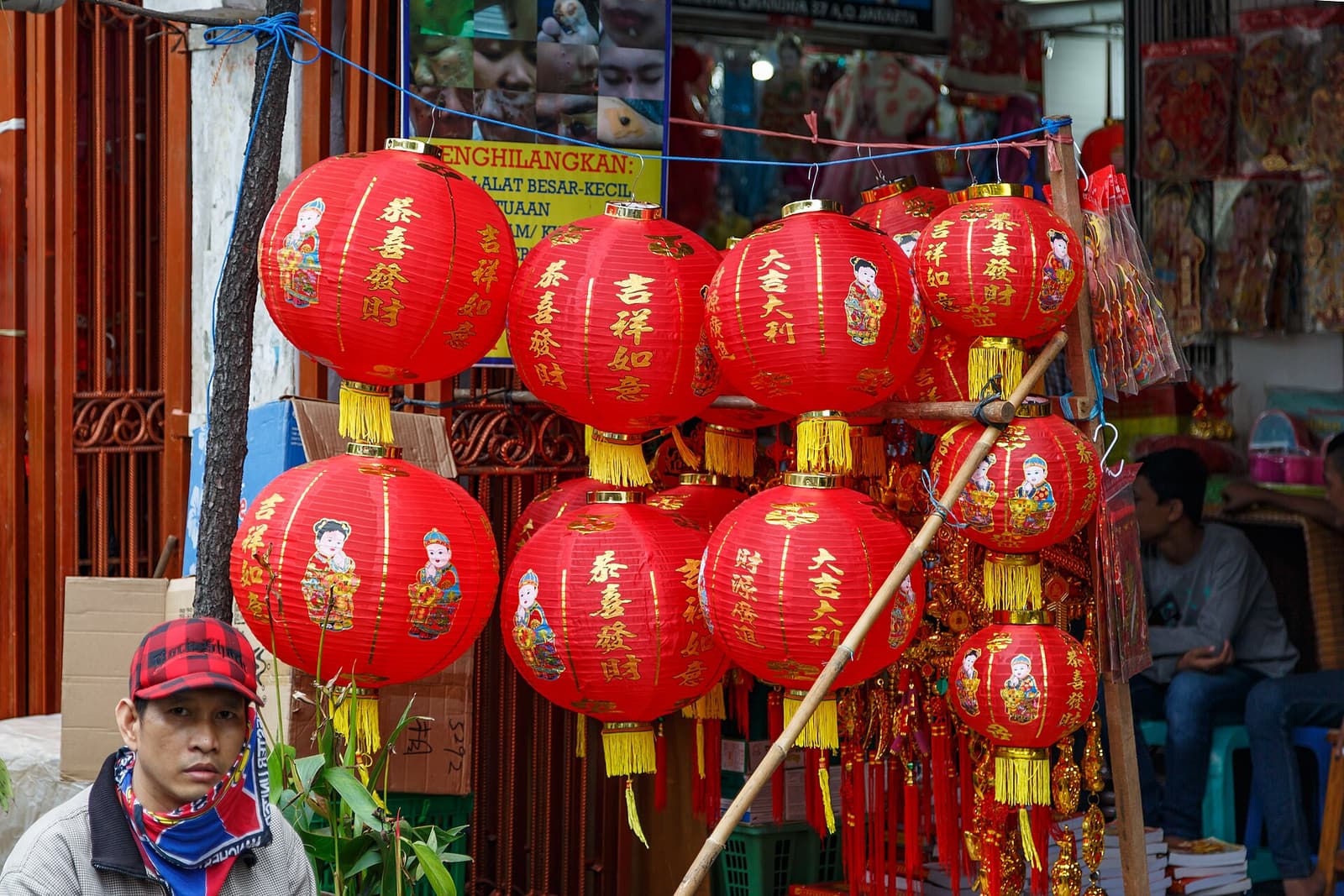
Glodok has been the centre of Chinese life in Jakarta since the eighteenth century, when the Dutch authorities required the Chinese community to live outside Batavia’s walls after the massacre of 1740. Today it is a dense commercial quarter of electronics malls, gold shops and medicine halls — and, in the lanes behind them, one of the city’s most rewarding places to walk and eat.
The core is Petak Sembilan, a market street of produce, live frogs, temple offerings and sweets, which ends at the gate of the city’s oldest Chinese temple. Chinese New Year and Cap Go Meh are the big occasions, but any morning is lively.
Top things to do at Glodok (Chinatown)
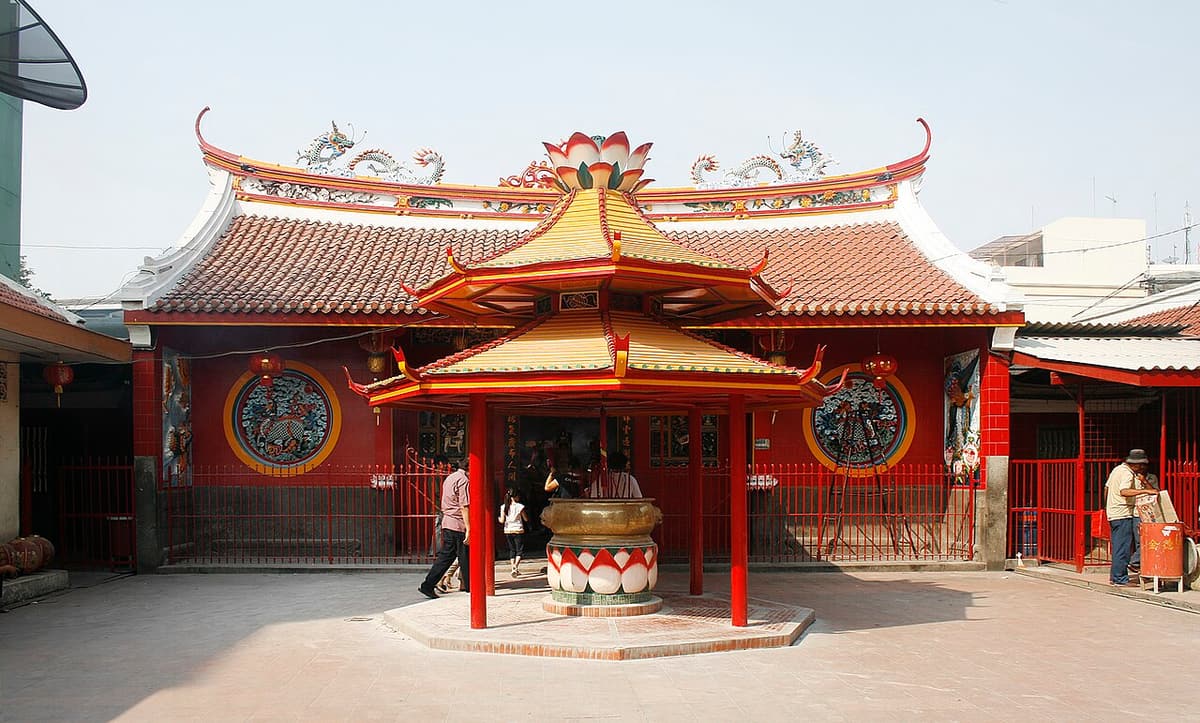
Visit Dharma Bhakti temple
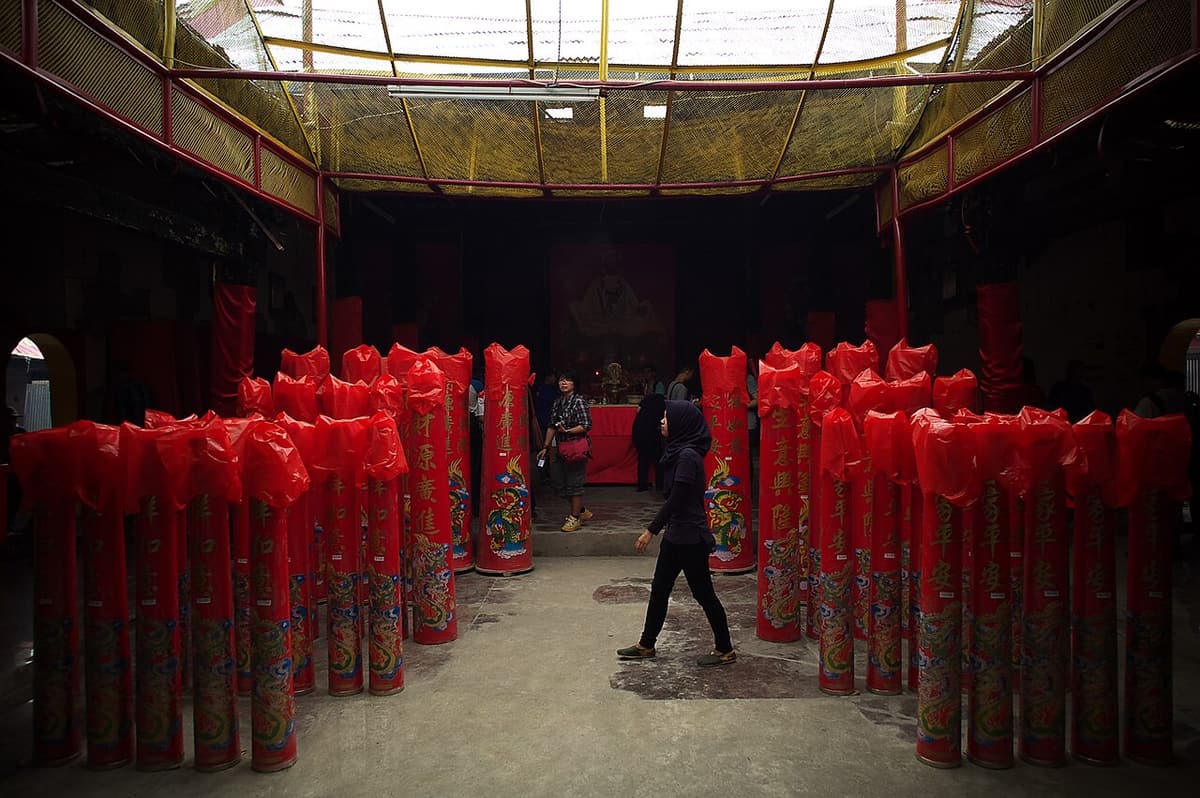
Also known as Kim Tek Ie or Jin De Yuan, this Buddhist-Taoist temple was founded around 1650. Its main hall was badly damaged by fire in 2015 and has been under restoration, but it remains in use, thick with incense and red candles. Enter quietly and ask before photographing worshippers.
Walk Petak Sembilan market
Wander the market lane from Jalan Pancoran towards the temple, then look for the nearby Toa Se Bio temple and the Church of Santa Maria de Fatima, a Catholic church in a former Chinese mansion with curved roofs and guardian lions.
Eat your way down Gang Gloria
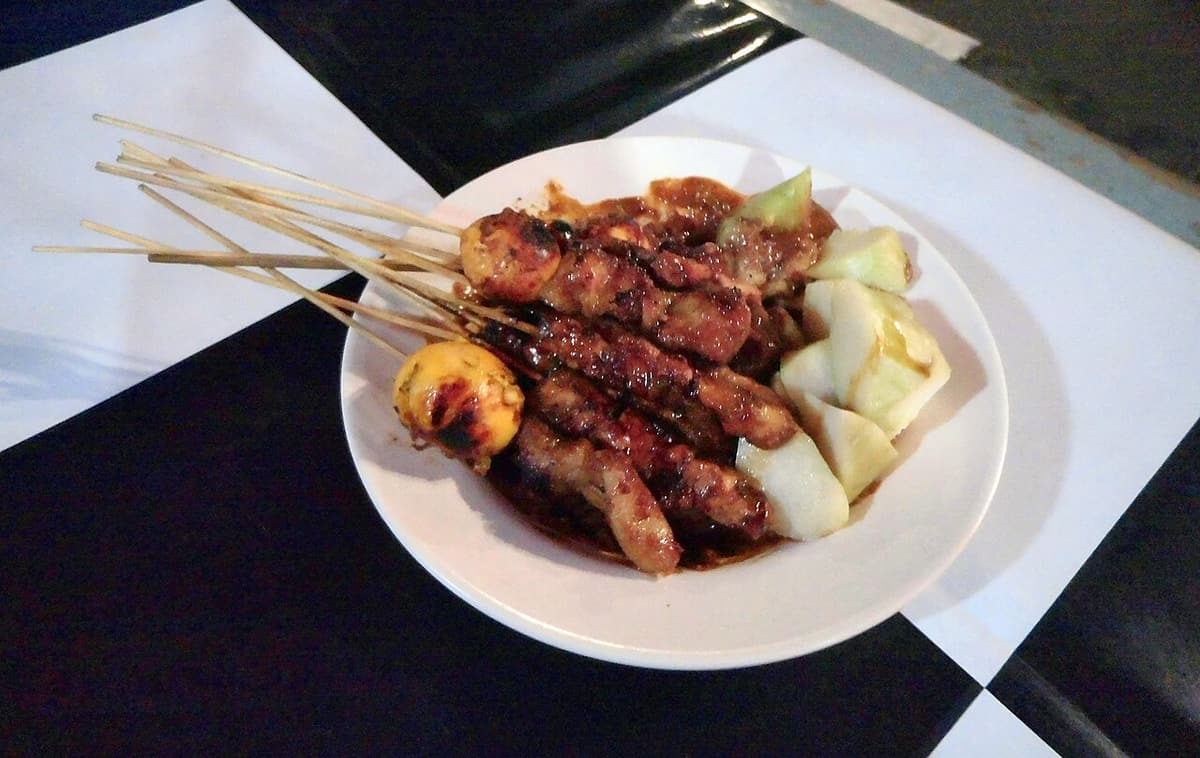
This narrow alley off Jalan Pancoran is breakfast central: noodles, pork satay, gado-gado, sweet snacks and iced coffee at a coffee shop that has been here since the 1920s. Note that much of the food in Glodok is not halal.
Take tea at Pantjoran Tea House
At the entrance to Glodok, a restored corner building that was once a pharmacy now serves Chinese tea and food. Outside, pots of free tea for passers-by revive an old local tradition.
Join a food tour
A guided Chinatown food walk is the easiest way to find the best stalls and understand what you are eating.
How to get to Glodok (Chinatown)
- By TransJakarta: Corridor 1 stops at Glodok, on Jalan Gajah Mada.
- From Kota Tua: about 1 km south of Fatahillah Square; 15 minutes on foot.
- By commuter train: Jakarta Kota station, then walk south.
Insider tips
- Go in the morning, ideally before 10 am: the market and breakfast stalls wind down by early afternoon.
- Bring small notes; most stalls are cash-only or accept local QR payments.
- The lanes are narrow and shared with motorbikes — keep to the side.
- Dress modestly for temples and do not touch altar offerings.
Best tours & tickets for Glodok (Chinatown)
These top-rated experiences are the easiest way to see Glodok (Chinatown):
Food tour from €37 Jakarta: Glodok Chinatown Morning Food Tour with 7+ Tastings
A small-group morning walk through Glodok’s lanes with classic Chinese-Indonesian dishes, street snacks and a stop at a long-established coffee shop.
- Seven tastings in Jakarta’s Chinatown
- A drink at a legendary coffee shop
- Classic dishes, street snacks and a dessert
 Private heritage tour from €54
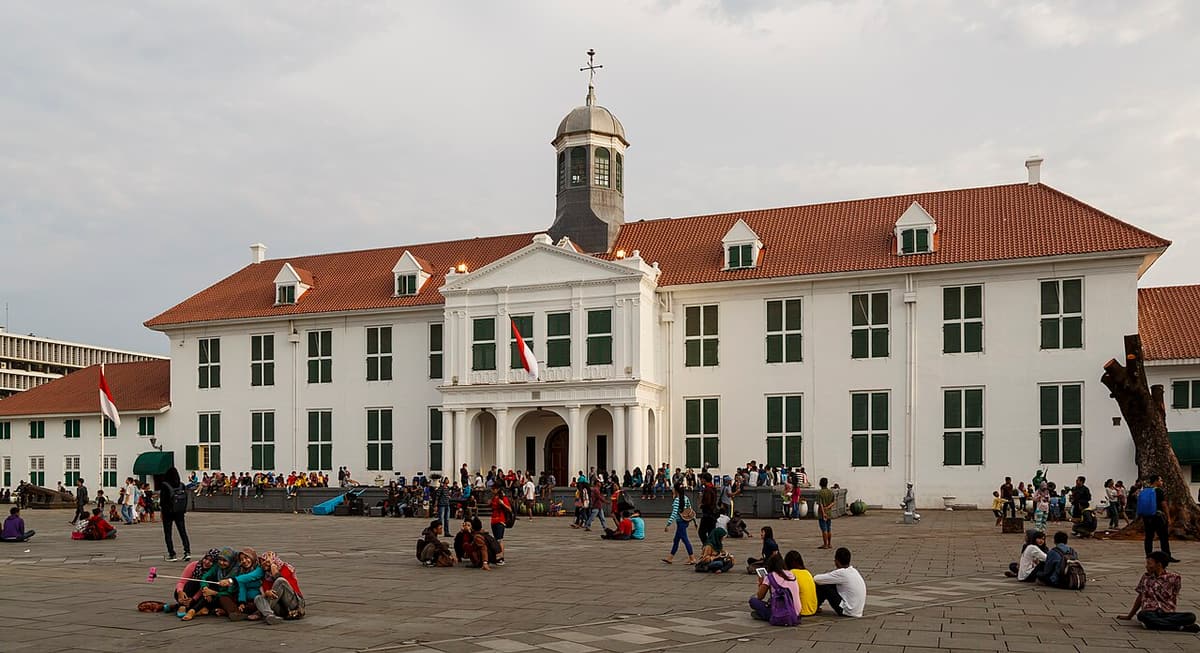
Jakarta City Tour with Heritage of Old Batavia and Museum
A private tour of the north: the old town and its history museum, Glodok, a puppet studio and Sunda Kelapa, with a short ride in a three-wheeled bajaj.
- Old Town, Chinatown and the old harbour
- A puppet studio and the Fatahillah Museum
- A short tuk-tuk (bajaj) ride
 Food tour from €34
Jakarta: Local Street Food Shared Tour with MRT Jakarta
A shared food tour that uses the MRT to link several eating spots, from cooked-to-order street dishes to more refined Javanese flavours. A relaxed way to eat widely and safely.
- Street-vendor dishes cooked on the spot
- Travel between stops on the MRT
- Food tastings included