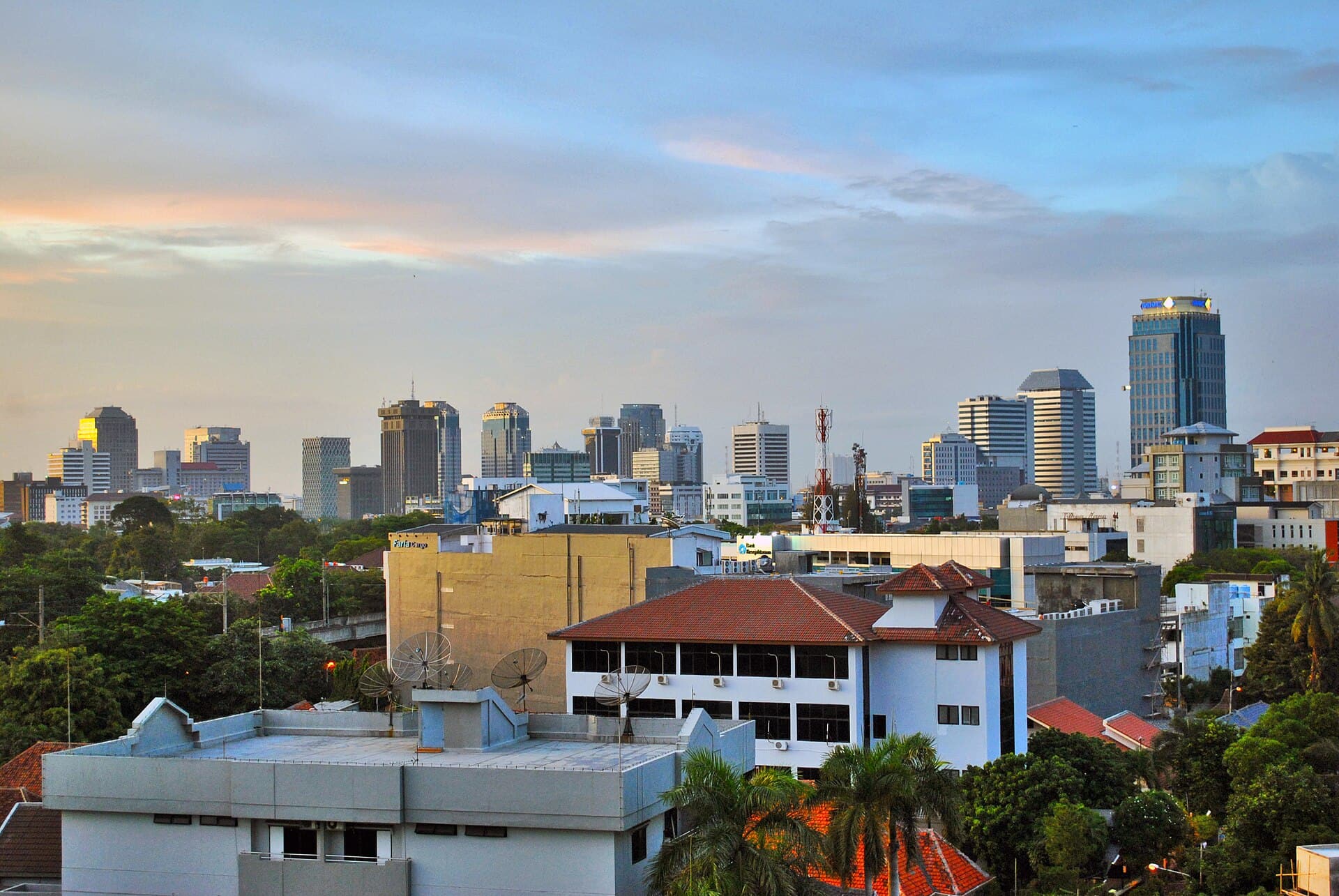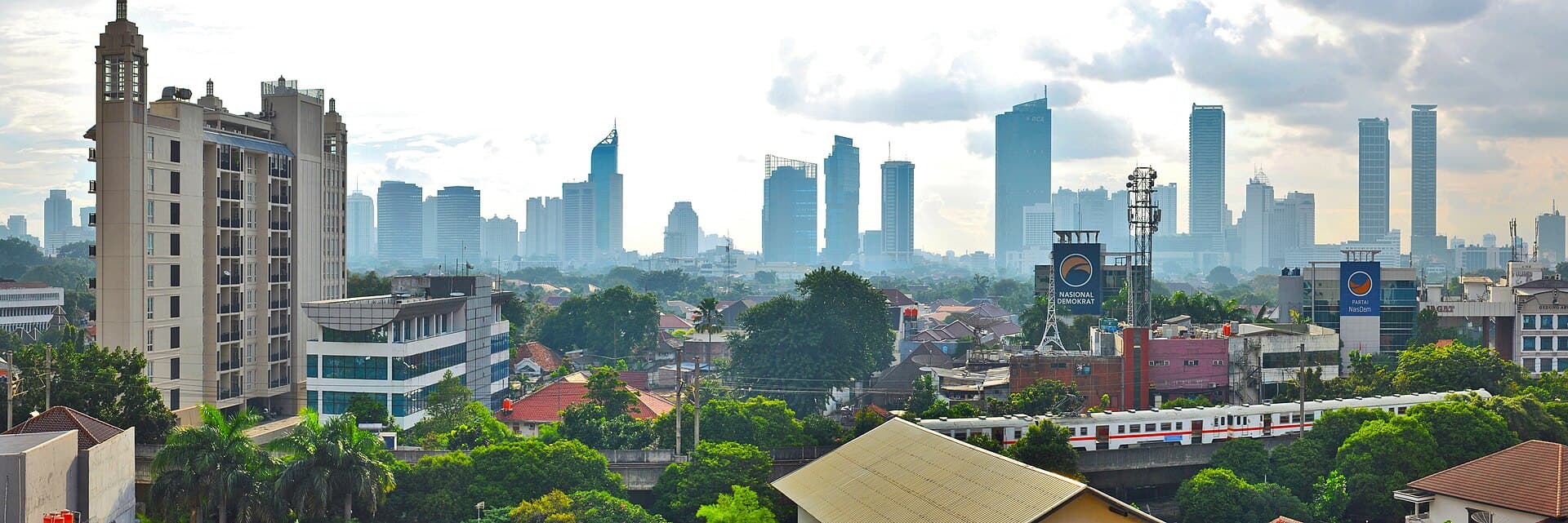
Jakarta sits on the north-west coast of Java, where the Ciliwung river meets the Java Sea. The city proper has around eleven million residents; the wider conurbation — Jakarta plus Bogor, Depok, Tangerang and Bekasi, known as Jabodetabek — has more than thirty million, making it one of the largest urban areas on earth.
A very short history
The story begins at Sunda Kelapa, the pepper port of the Hindu kingdom of Sunda. In 1527 the port was taken by forces led by Fatahillah and renamed Jayakarta; the city still celebrates its anniversary on 22 June. In 1619 the Dutch East India Company under Jan Pieterszoon Coen destroyed Jayakarta and built Batavia, a walled canal town that became the headquarters of its Asian trade — today’s Kota Tua. The Japanese occupation in 1942 brought the name Jakarta, and on 17 August 1945 Sukarno and Mohammad Hatta proclaimed Indonesian independence here.
Sukarno then set about giving the new capital monuments to match: Monas, the Istiqlal Mosque, the Hotel Indonesia roundabout with its Welcome statue and the Gelora Bung Karno stadium, built for the 1962 Asian Games.
Understanding the neighbourhoods
| Area | Character | Come here for |
|---|---|---|
| Merdeka Square & Gambir | Monumental, governmental | Monas, National Museum, Istiqlal, the cathedral |
| Thamrin & Menteng | Central, leafy, upmarket | Malls at Bundaran HI, Jalan Sabang food, colonial villas |
| Sudirman, SCBD & Senopati | Glass towers, restaurants | Fine dining, rooftop bars, clubs, Pacific Place |
| Blok M & Kemang | South Jakarta, younger crowd | Street food, Little Tokyo, cafés, live music |
| Kota Tua & Glodok | Colonial and Chinese old town | Museums, temples, markets, the harbour |
| Ancol & PIK | Reclaimed north coast | Theme parks, seafood, waterfront dining, island boats |
 Central Jakarta
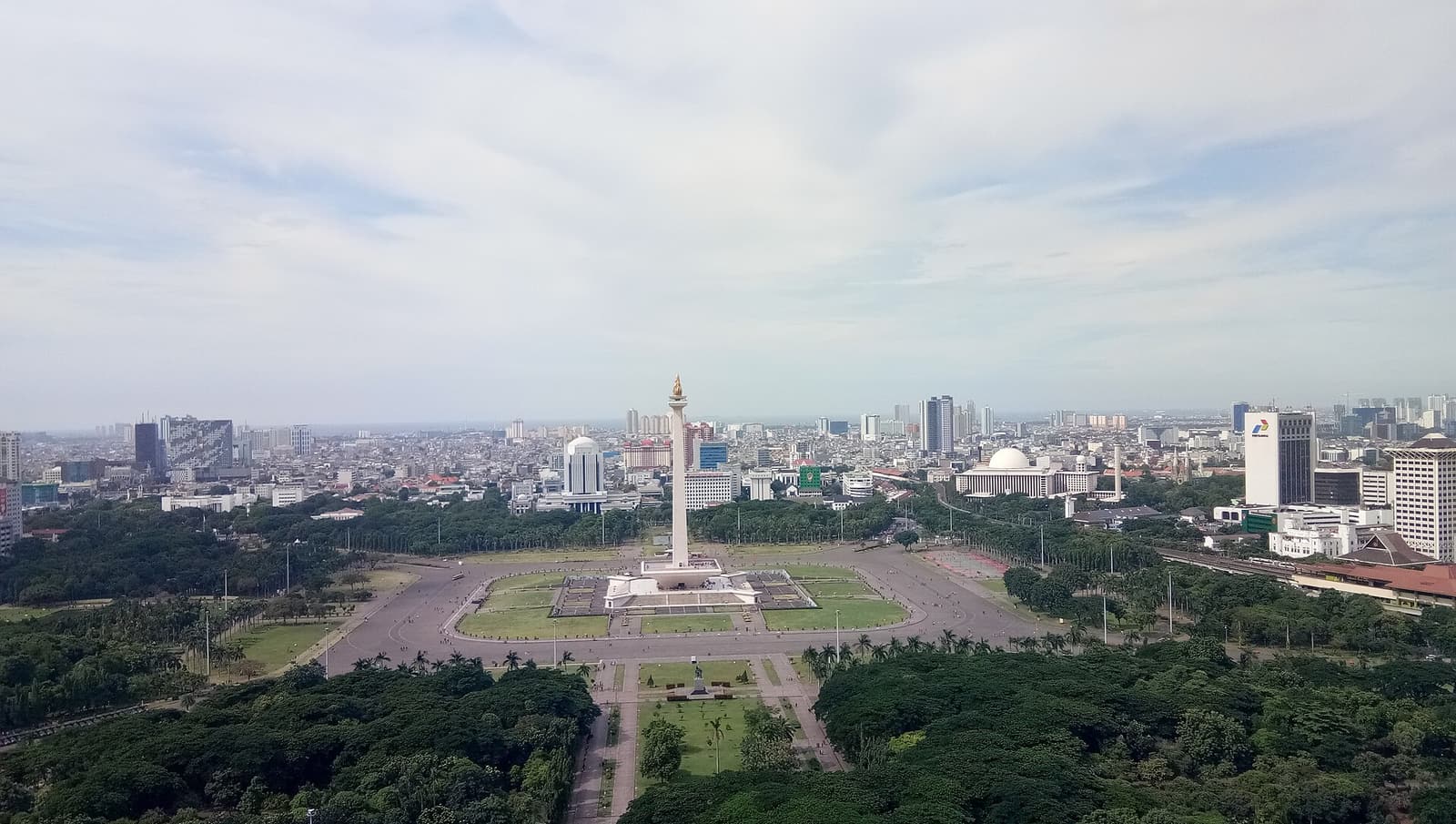
Monas (National Monument)
The 132-metre obelisk at the heart of the capital
A marble obelisk crowned with a gold-coated flame, standing in the middle of Merdeka Square. Ride the lift to the observation deck for the best view of the city, then visit the history dioramas in the base.
 Central Jakarta
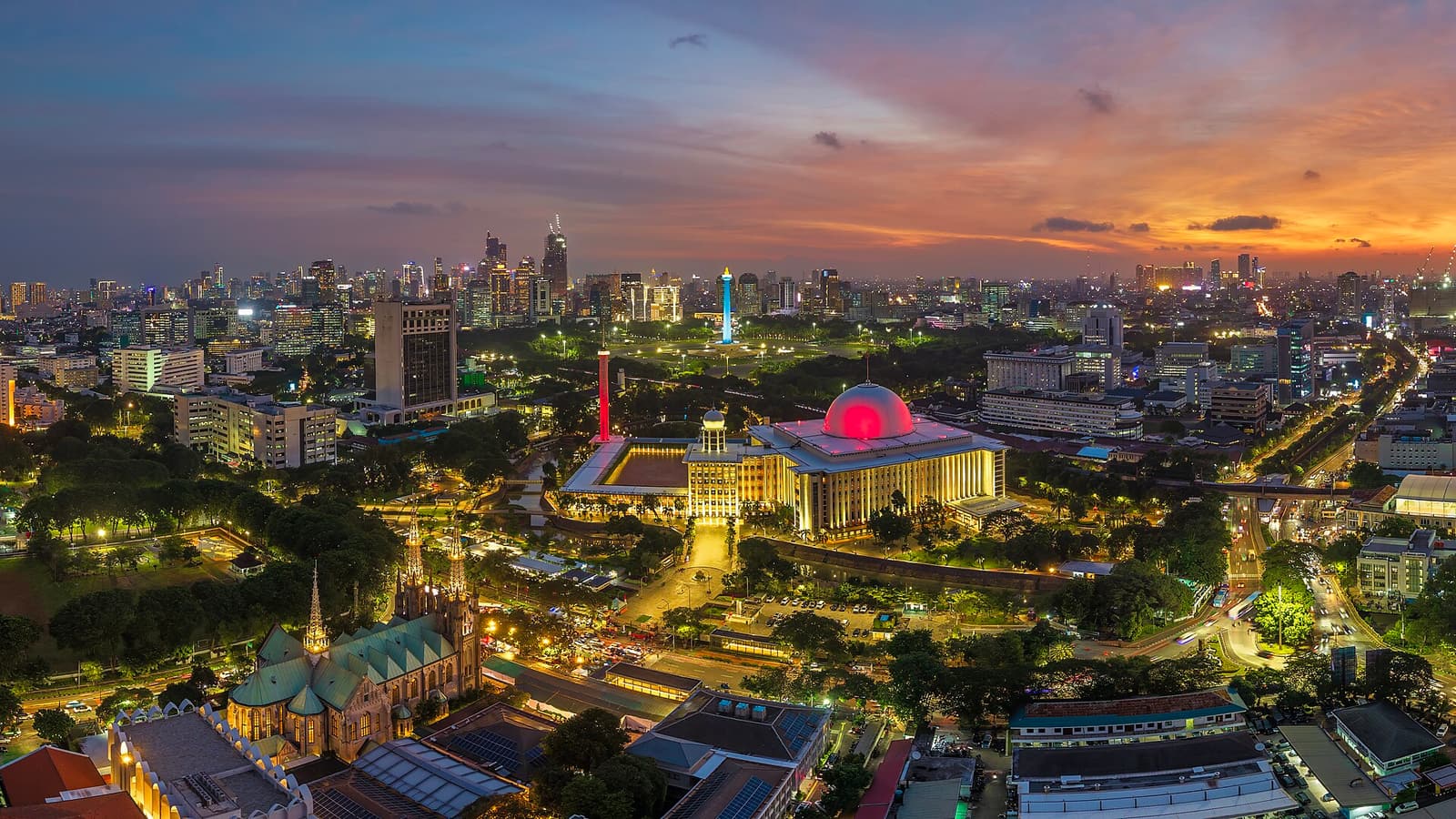
Istiqlal Mosque & Jakarta Cathedral
Southeast Asia’s largest mosque, facing a neo-Gothic cathedral
The national mosque and the Catholic cathedral stand opposite each other across a single street, linked since 2021 by an underground “Tunnel of Friendship”. Together they are the city’s most telling stop — and both welcome visitors.
 Old Batavia & the north coast
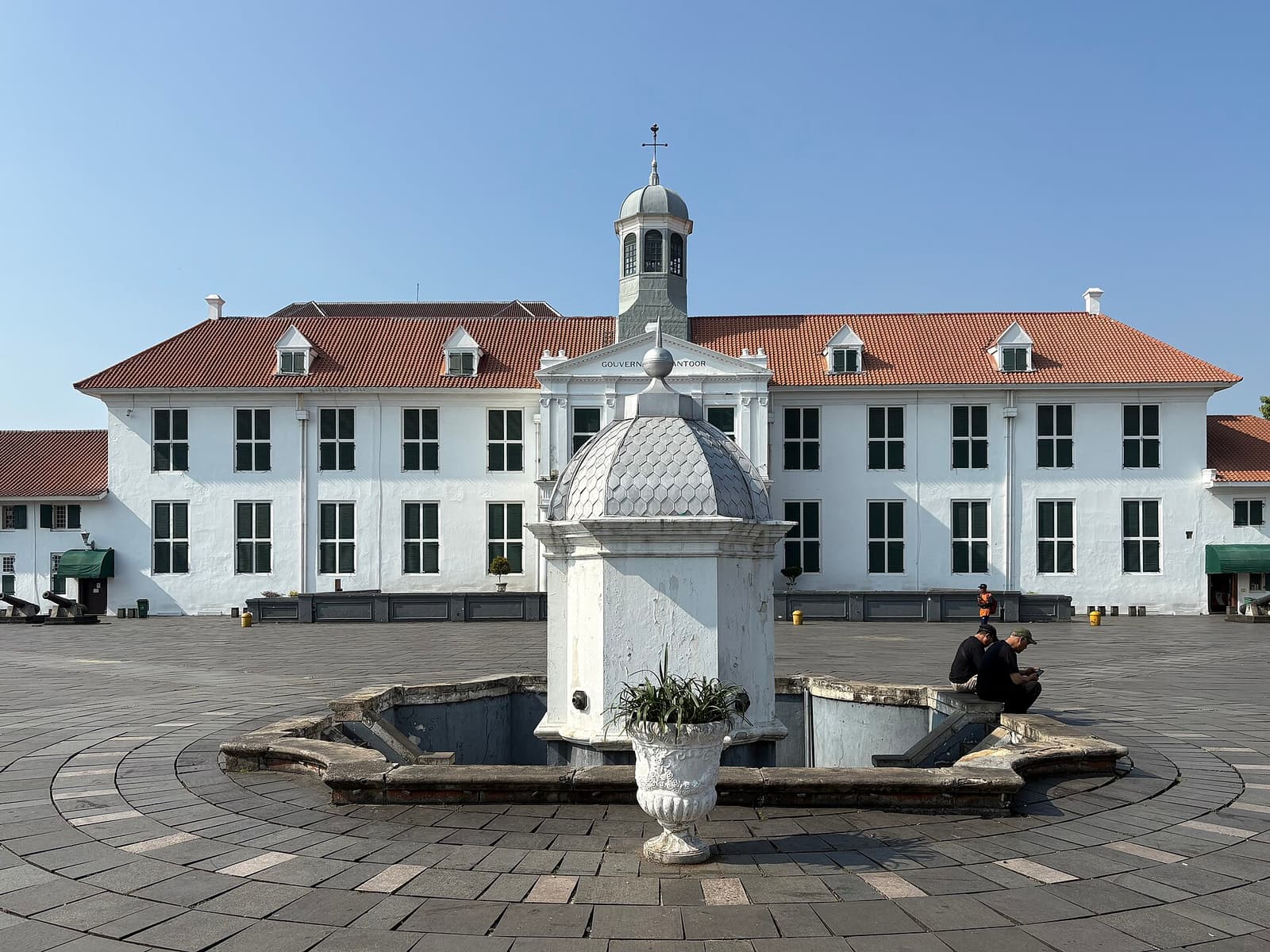
Kota Tua (Old Batavia)
The Dutch East India Company’s town, around Fatahillah Square
Jakarta’s old town: a cobbled square ringed by the former city hall, museums in colonial buildings, Café Batavia and rows of brightly painted bicycles for hire. The most walkable, photogenic corner of the city.
 Old Batavia & the north coast
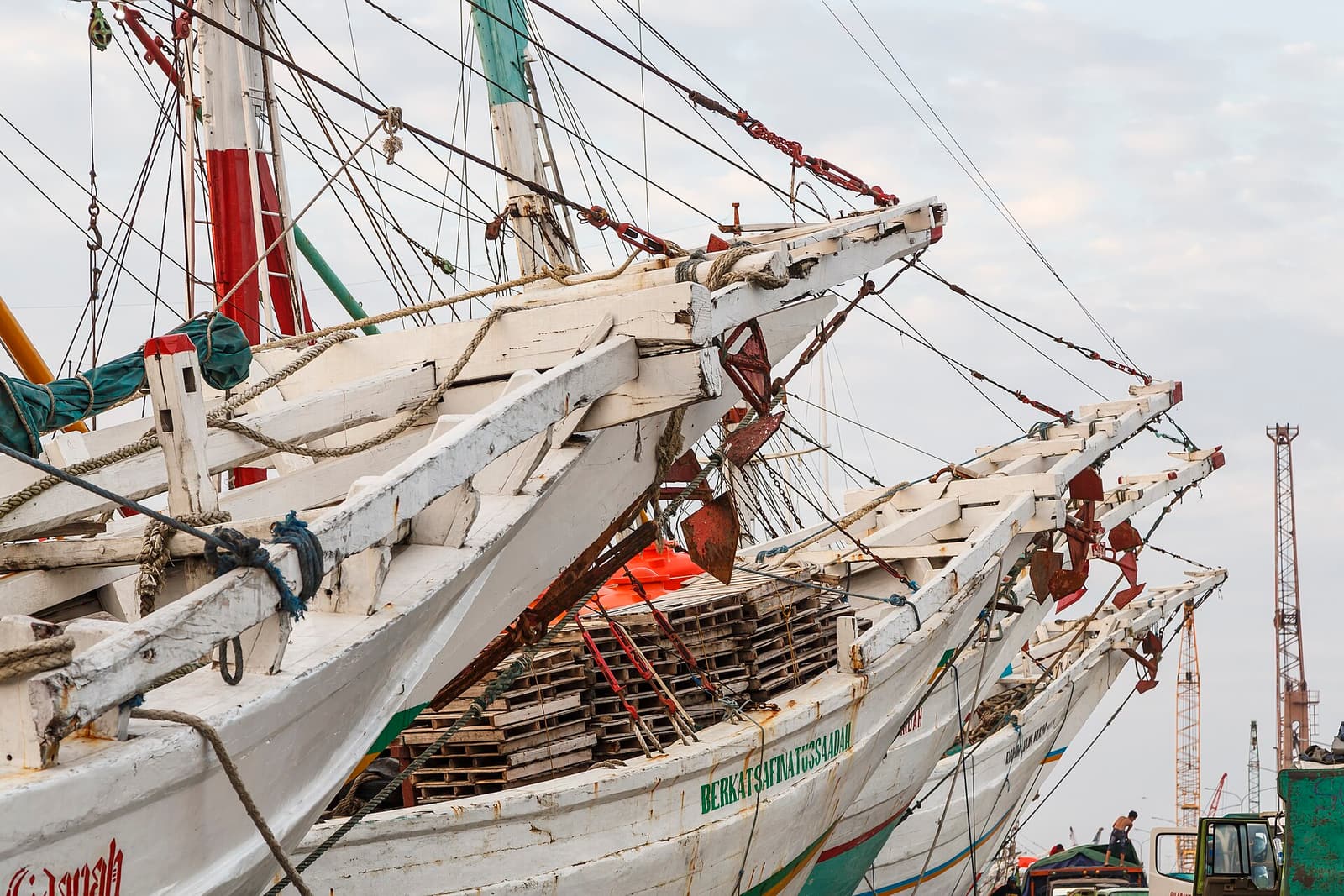
Sunda Kelapa Harbour
Wooden schooners on the quay where Jakarta began
The city’s original port, still lined with hand-built pinisi cargo schooners loading by gangplank for the outer islands. Nearby, the Maritime Museum fills the Dutch East India Company’s old spice warehouses.
What to see
Each of the main sights has its own page under things to do. In short: start with Monas and the National Museum; walk between the Istiqlal Mosque and the cathedral; give half a day to Kota Tua and another to Glodok and Sunda Kelapa. Families head for Ancol, Taman Mini and Ragunan Zoo; for Betawi culture, go to Setu Babakan.
What to eat
Jakarta is where every Indonesian regional cuisine comes to compete, on top of the city’s own Betawi cooking. Things to look for:
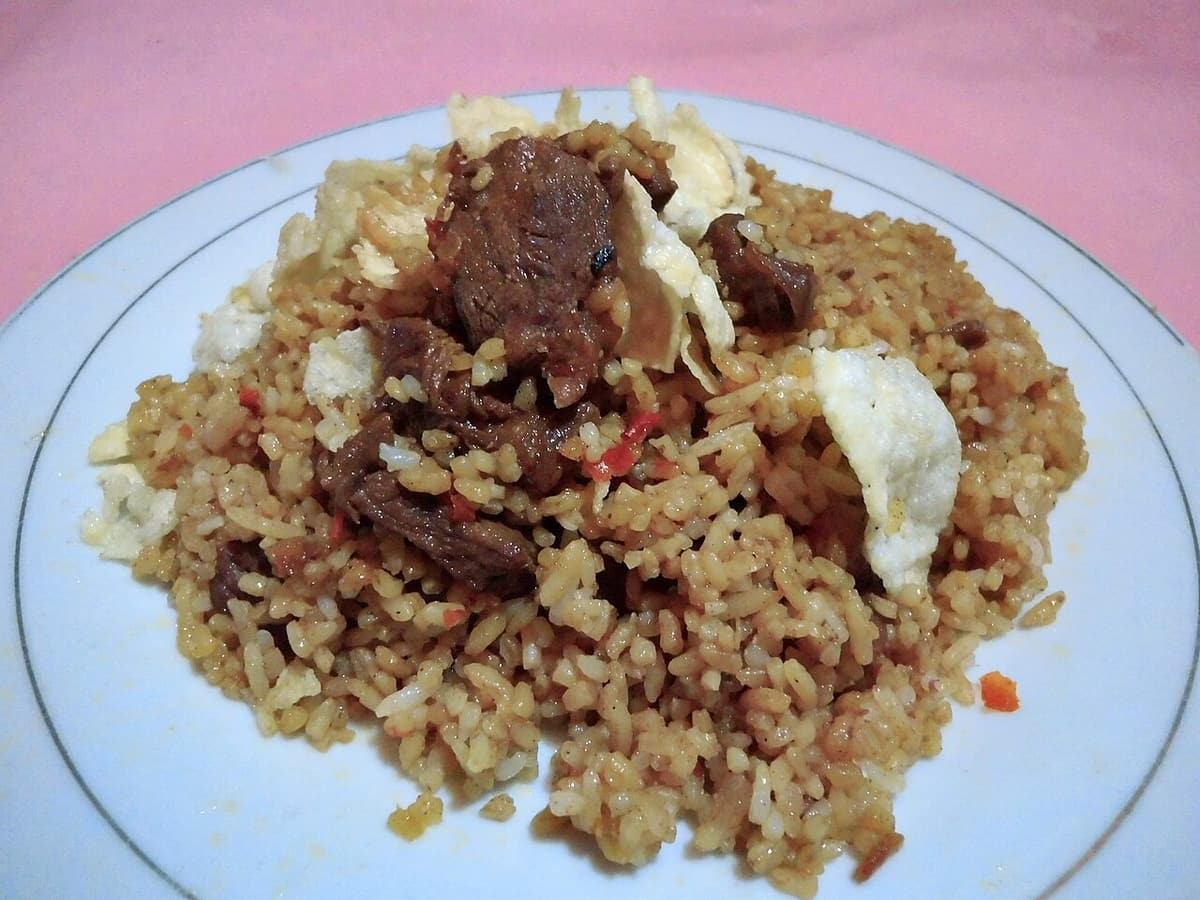
- Nasi goreng: fried rice, at its best from a night-time cart. The goat-meat version (nasi goreng kambing) at Kebon Sirih is a city institution.
- Sate: charcoal-grilled skewers of chicken or goat with peanut or sweet-soy sauce. Jalan Sabang is lined with sate smoke after dark.
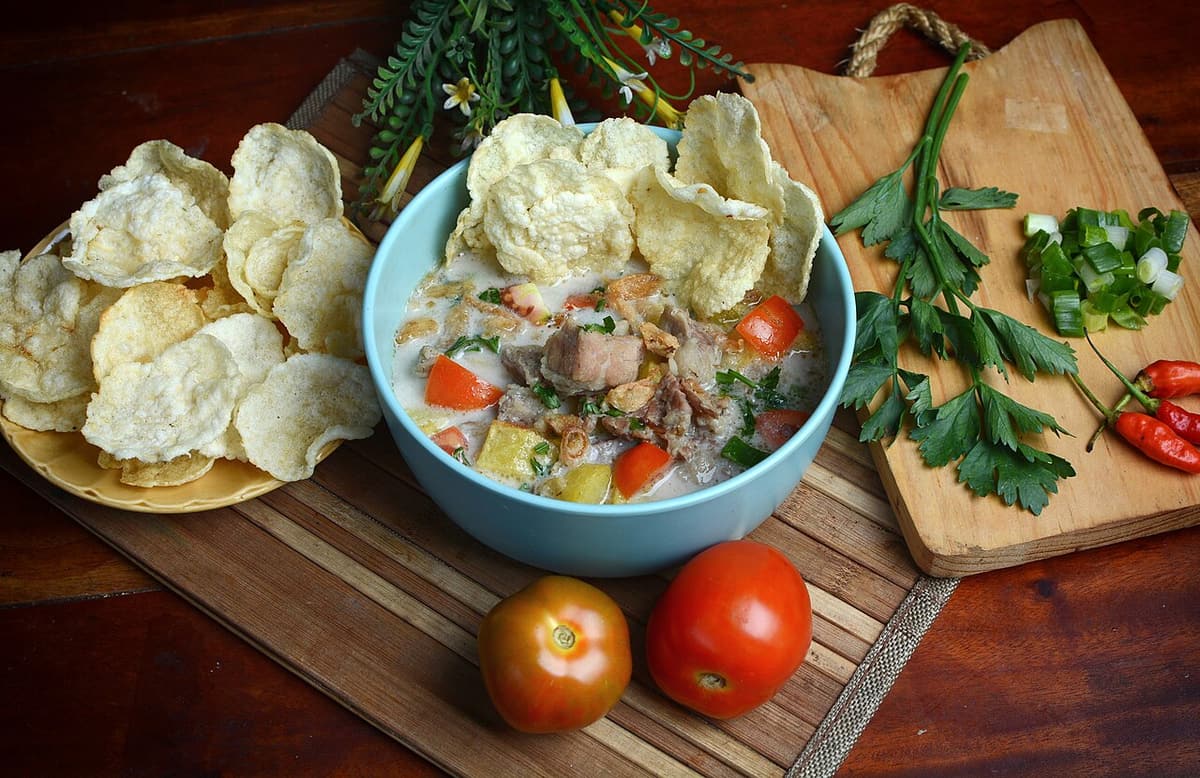
- Soto Betawi: the city’s own beef soup, rich with coconut milk or milk, served with rice, lime and crackers.
- Kerak telor: a crisp omelette of sticky rice and egg with toasted coconut and fried shallots, cooked over charcoal — sold around Monas, Kota Tua and Setu Babakan.
- Gado-gado and ketoprak: vegetables, tofu and rice cake under peanut sauce; good vegetarian choices.
- Nasi uduk, bubur ayam, martabak: coconut rice for breakfast, chicken rice porridge in the morning, stuffed pancakes at night.
- Bir pletok: despite the name, an alcohol-free Betawi drink of ginger and spices.
If you are wary of street stalls, eat the same dishes in mall food courts or at long-established restaurants — or join a guided food tour, which is the quickest way to learn what is what. Choose busy stalls, eat food cooked to order and stick to bottled or filtered water.
Where to eat and go out
- Jalan Sabang (near Thamrin): the classic central street-food strip.
- Blok M: food stalls, the Japanese bars and restaurants of Little Tokyo around Melawai, and creative spaces such as M Bloc. On the MRT.
- Glodok: Chinese-Indonesian breakfasts and coffee in the lanes of Chinatown.
- Senopati and Gunawarman: the city’s smartest restaurant streets, next to SCBD.
- SCBD: rooftop bars and the big nightclubs.
- Kemang: a long-standing expatriate area of cafés, bars and galleries.
- PIK (Pantai Indah Kapuk): waterfront promenades, seafood and a newly built Chinatown-style food quarter on the north coast, close to the airport.
Alcohol is legal and widely served in hotels, bars and many restaurants, though it is taxed heavily and absent from simple local eateries.
Shopping
Malls are Jakarta’s town squares: air-conditioned, full of good restaurants and open late. Grand Indonesia and Plaza Indonesia face each other at the Bundaran HI roundabout; Plaza Senayan, Senayan City and Pacific Place serve the south. Sarinah on Thamrin, the country’s first department store, has been restored and showcases Indonesian crafts and batik. For something less polished, try the textile wholesale warrens of Tanah Abang, the antiques stalls of Jalan Surabaya in Menteng or Pasar Baru’s old shopping street.
Money
- The currency is the Indonesian rupiah (IDR). ATMs are everywhere and most accept foreign cards.
- Cards are accepted in malls, hotels and larger restaurants; carry cash for stalls, small shops and some entrance fees.
- QR payments (QRIS) are ubiquitous. Some foreign banking and wallet apps can now scan them — check with yours.
- Restaurant bills often add tax and a service charge. Tipping beyond that is appreciated but not expected; rounding up for drivers is normal.
Safety and health
- Jakarta is generally safe for visitors. The everyday risks are traffic, uneven pavements and opportunistic theft — keep phones and bags away from the roadside.
- Do not drink tap water. Bottled water is cheap and hotels provide it.
- Air quality is often poor, especially in the dry season. If you are sensitive, check an air-quality app and carry a well-fitting mask.
- Heavy rain can flood low-lying districts between about December and February; see when to visit.
- Demonstrations take place from time to time around government buildings and Merdeka Square. They are usually peaceful but are best avoided.
- Carry travel insurance. International-standard private hospitals are available in the city.
Etiquette and what to wear
Jakarta is a majority-Muslim city and also a cosmopolitan one. Light, loose clothing that covers shoulders and knees is the comfortable default and is required at mosques and temples; malls and restaurants are heavily air-conditioned, so carry a layer. Remove shoes where you see others doing so, use your right hand to give and receive, and ask before photographing people. Bahasa Indonesia is the common language; English is widely understood in hotels, malls and by younger people, less so by street vendors and drivers.
Practical details
- Time zone: Western Indonesian Time (WIB), UTC+7.
- Electricity: 230 V, two-round-pin plugs (types C and F).
- Mobile data: tourist SIMs and eSIMs are sold at the airport and in malls; you will want data for ride-hailing apps.
- Opening days: most city-run museums close on Mondays.
Suggested itineraries
One day
Monas at opening time, the National Museum, lunch on Jalan Sabang, then the Istiqlal Mosque and the cathedral. Take TransJakarta north for Kota Tua in the late afternoon and stay for dinner at Café Batavia or in Glodok.
Three days
Day one as above, without the rush north. Day two: Kota Tua’s museums, Glodok’s temples and markets, Sunda Kelapa at golden hour. Day three: a day out — the Thousand Islands, Bogor or Bandung — and an evening in Blok M or SCBD.
With children
Swap a museum for Ancol’s theme parks, the cable car and traditional houses of Taman Mini, or Ragunan Zoo — and consider Taman Safari in the Puncak hills as a day trip.