Jakarta’s reputation for gridlock is deserved, but the picture has changed a great deal since the MRT opened in 2019. Rail now covers the central spine of the city, a dedicated-lane bus network reaches almost everywhere else, and app-based cars and motorbike taxis fill the gaps cheaply. The trick is to use rail for the long stretches and wheels for the last kilometre.
Most international visitors arrive at Soekarno–Hatta International Airport (CGK), in Tangerang, roughly 25–30 km west of the centre. A smaller airport, Halim Perdanakusuma (HLP) in East Jakarta, handles some domestic flights.
From the airport to the city
| How | Time | Cost (approx.) | Best for |
|---|---|---|---|
| Airport train to BNI City / Manggarai | ≈45–55 min | around IDR 70,000 — check current fares | Solo travellers, peak-hour arrivals |
| Metered taxi (e.g. Bluebird) | 45–90 min | roughly IDR 200,000–300,000 incl. tolls | Groups, luggage, late arrivals |
| Grab / Gojek car | 45–90 min | similar to or a little under a taxi | App users with mobile data |
| Pre-booked private transfer | 45–90 min | from ≈€18 per vehicle | First visits, families |
| DAMRI airport bus | 60–120 min | cheapest option | Tight budgets, no rush |
1. The airport train
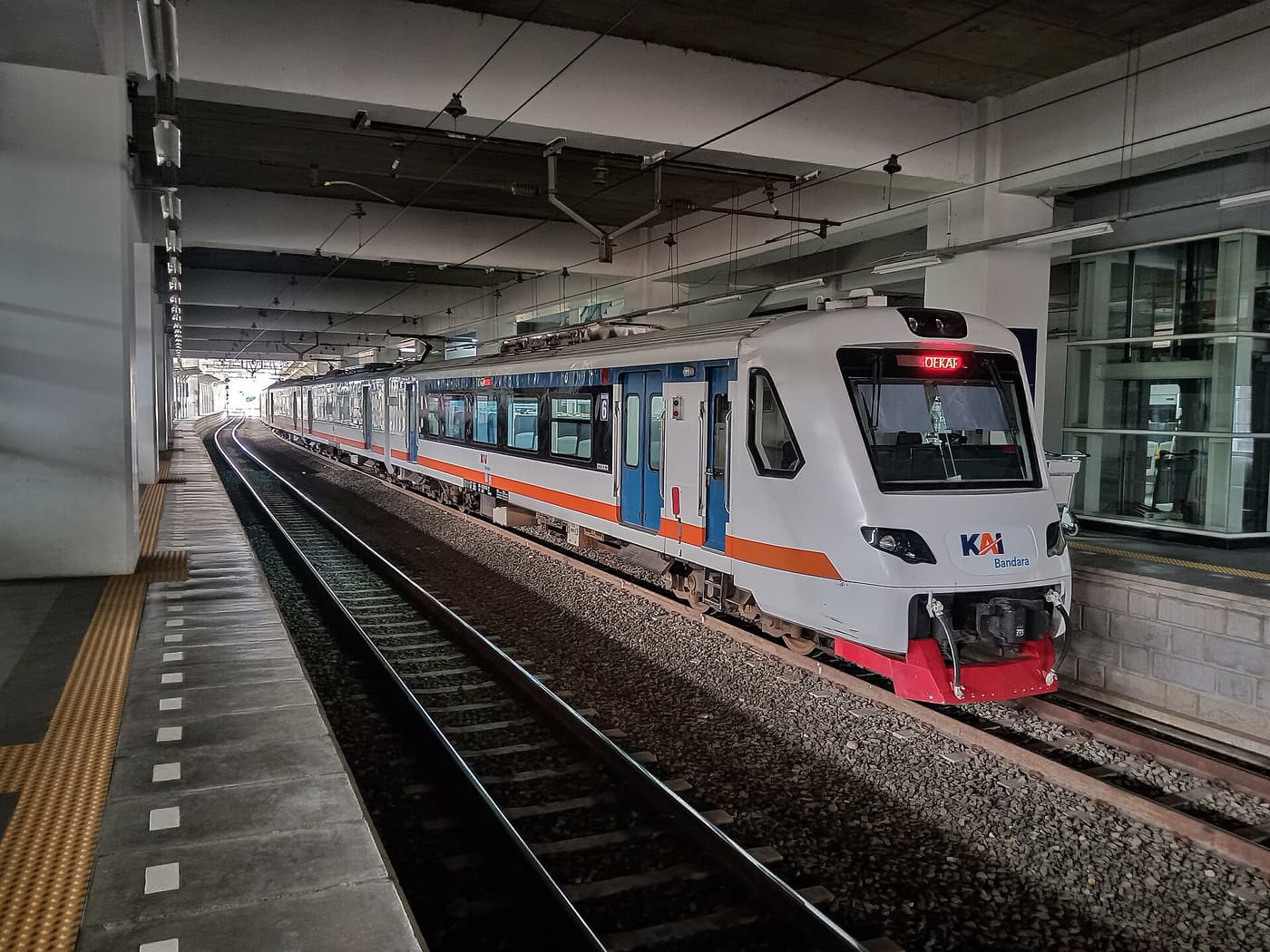
The airport rail link runs from the airport station to BNI City (also signed Sudirman Baru), a short walk from Dukuh Atas MRT and Sudirman commuter station, and on to Manggarai. The ride takes roughly 45–55 minutes and is immune to traffic. From Terminals 1, 2 and 3 a free driverless Skytrain shuttles to the airport station. Trains run at intervals through the day rather than every few minutes, so check the timetable when you land.
2. Taxis, ride-hailing and transfers
Official taxi counters and ranks are signposted outside arrivals; Bluebird is the best-known metered operator. Grab and Gojek have designated pickup points at each terminal. Tolls are added to the fare. In the evening rush the drive can take well over an hour, so a pre-booked private transfer with a driver waiting is worth considering after a long flight.
MRT Jakarta
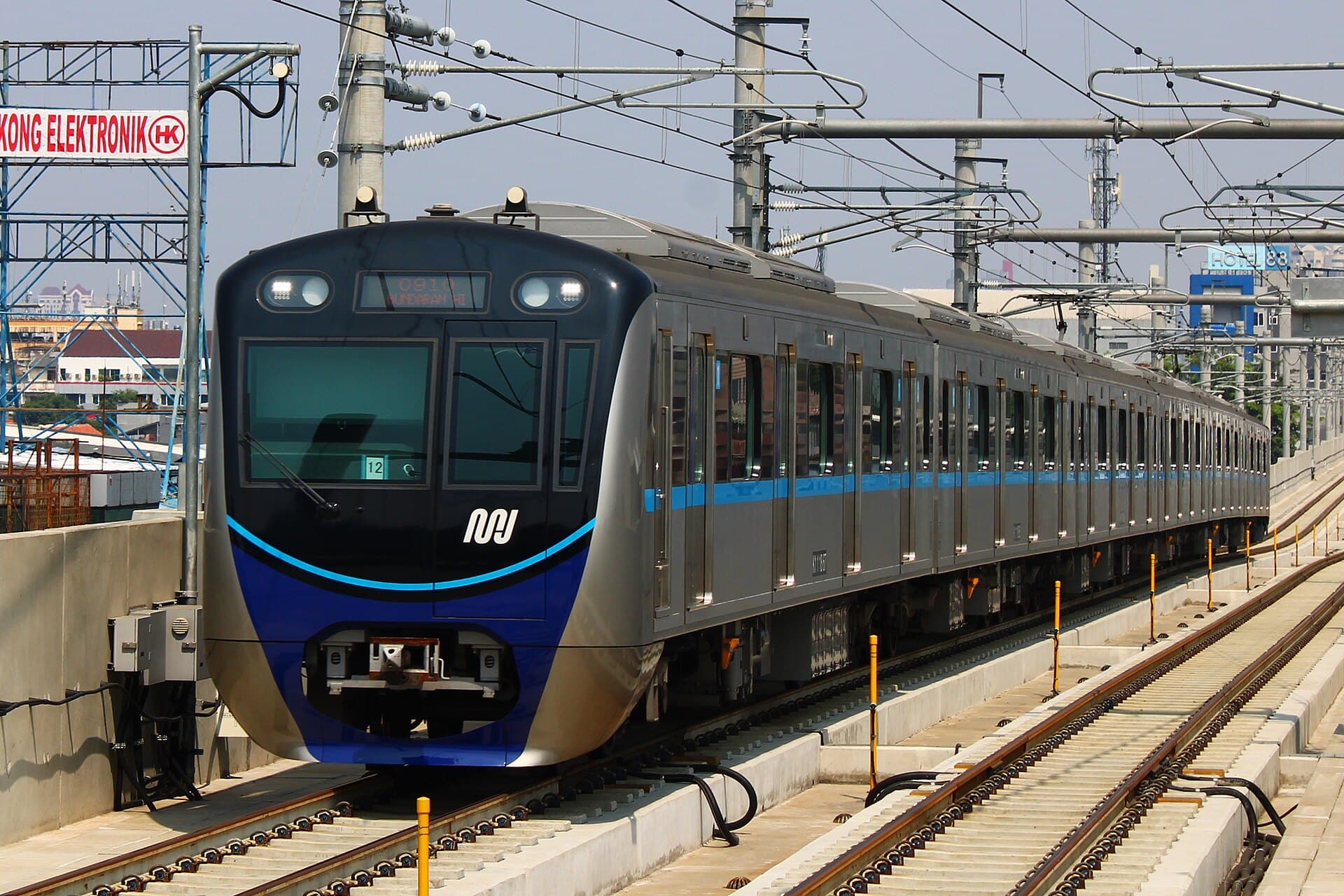
The North–South line runs from Lebak Bulus in the south to Bundaran HI in the centre: 13 stations, about 16 km, around half an hour end to end. It passes Blok M, Senayan, Istora (for SCBD) and Dukuh Atas. Trains are clean, air-conditioned and frequent. An extension north towards Kota is under construction, with stations expected to open in stages over the coming years; until then, use TransJakarta or the commuter train to reach the old town.
TransJakarta
The bus rapid transit system has run since 2004 and is one of the longest BRT networks in the world. Buses use dedicated lanes and raised stations in the middle of the road. Corridor 1 (Blok M–Kota) is the visitor’s workhorse: it runs up Sudirman and Thamrin past Monas to the old town. Fares are a flat few thousand rupiah. Cash is not accepted — you tap in with a prepaid card.
LRT and commuter trains
- LRT Jabodebek: driverless trains from Dukuh Atas to the eastern and southern suburbs. Useful for Taman Mini (TMII station) and for Halim, the Whoosh high-speed rail terminus.
- LRT Jakarta: a short separate line in the north-east (Kelapa Gading–Velodrome), being extended towards Manggarai. Of limited use to most visitors.
- KRL Commuter Line: cheap, frequent suburban trains. The key routes for visitors are to Jakarta Kota (old town) and to Bogor (about 1–1.5 hours). Avoid weekday rush hours, when trains are extremely crowded.
Paying for public transport
Buy a prepaid contactless card — bank e-money cards such as Mandiri e-money, BCA Flazz, BNI TapCash and BRI Brizzi, or the city’s JakCard — at MRT stations, TransJakarta stations and convenience stores. One card works on the MRT, LRT, TransJakarta and commuter trains, and many museums and Monas use the same cards at the gate. Each traveller needs their own card on most services.
Gojek, Grab and taxis
The two ride-hailing apps are how most Jakartans move. Cars are inexpensive by international standards; motorbike taxis (ojek) are cheaper still and by far the fastest way through a jam, with a helmet provided. Both apps accept cash as well as cards. Bluebird taxis can be hailed on the street or through the My Bluebird app.
Traffic and the odd-even rule
Rush hours run roughly 6–10 am and 4–9 pm on weekdays, and rain makes everything slower. During those hours an odd-even (ganjil-genap) rule applies on many main roads: private cars with odd-numbered plates may only use them on odd dates, even plates on even dates. Taxis, motorbikes and public transport are exempt, so it mainly matters if you hire a private car with a driver — a good driver will plan around it.
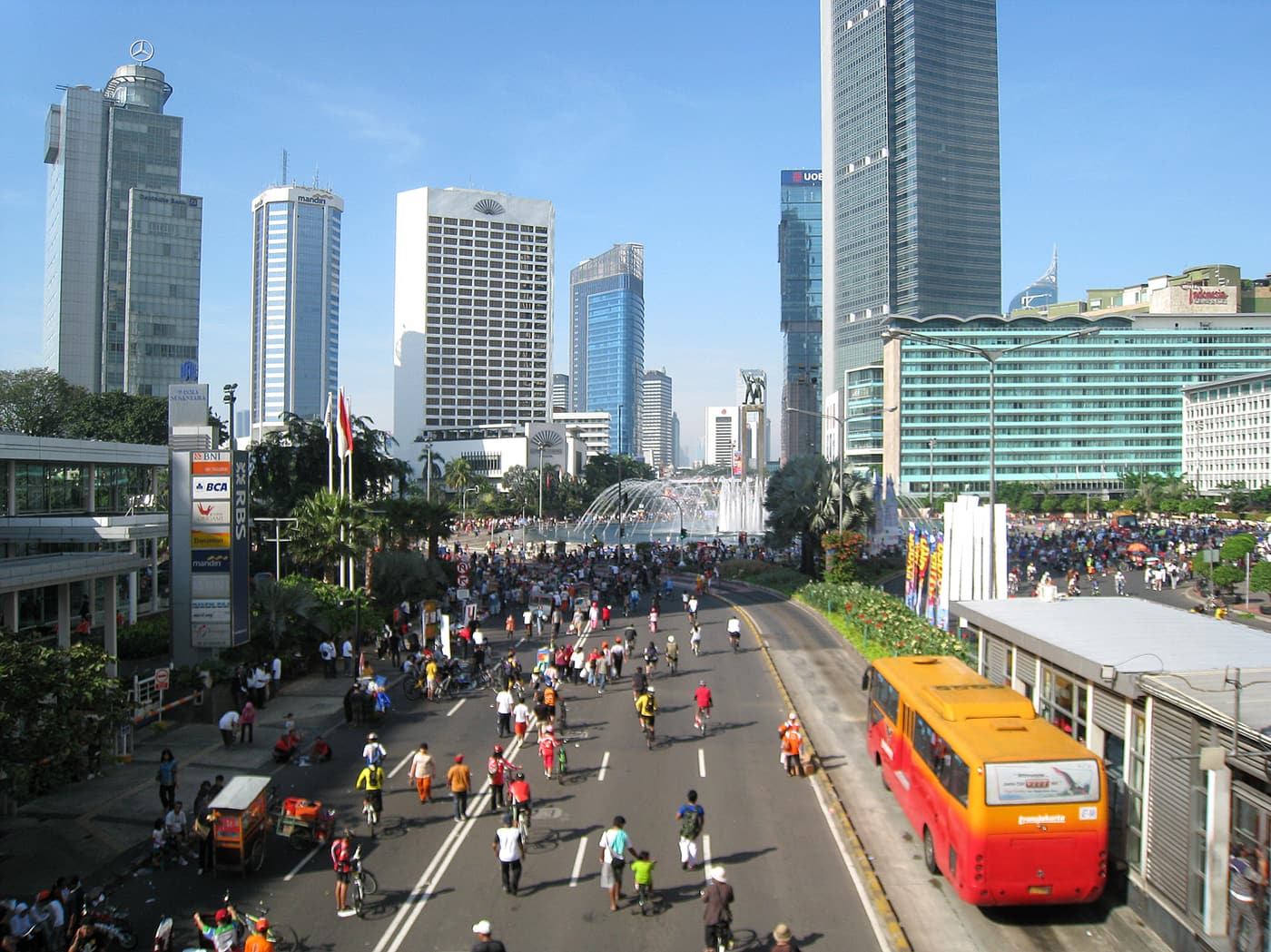
On Sunday mornings Jalan Sudirman and Jalan Thamrin close to motor traffic for Car Free Day, and the boulevard fills with joggers, cyclists and food carts.
Walking
Pavements along Sudirman–Thamrin and around the new transit hubs are wide and pleasant; elsewhere they can be broken, blocked or missing. Heat and humidity make even a kilometre feel long at midday. Walk early or after dark, use footbridges and underpasses, and do not expect traffic to stop at crossings.
Leaving town: Whoosh and long-distance trains
- Whoosh high-speed train to Bandung: from Halim station in East Jakarta to Padalarang in around 30 minutes and Tegalluar in about 45, with a feeder train from Padalarang into central Bandung. See our Bandung page.
- Conventional trains to Yogyakarta, Surabaya and other Java cities leave from Gambir (beside Monas) and Pasar Senen stations. If Yogyakarta is next, our Malioboro Street guide starts at Tugu station, which sits at the north end of the street.
- Boats to the Thousand Islands leave from Marina Ancol and from the public piers further west — see the Thousand Islands page.
- Karimunjawa: these Java Sea islands are reached by boat from Jepara or Semarang on Central Java’s north coast, and Semarang is a train ride or short flight from Jakarta. Our guide to getting to Karimunjawa compares the boats.
- Lake Toba and Samosir: there are frequent flights from Jakarta to Medan’s Kualanamu airport, and fewer to Silangit near the lake. Our guide to getting to Samosir and Lake Toba covers the road to Parapat and the ferries.